

It usually happens with no warning: the key feels a little stiff, you turn it once more, and half the blade stays inside the ignition or the door lock. The other half is in your hand. In Miami, a broken car key is not just a broken piece of metal — on most modern vehicles that blade carries, or works together with, a transponder chip or a smart fob, so the fix has two parts: getting the broken piece out without damaging the lock, and making a working replacement key.
This guide explains why car keys break, what not to do in the first minutes, how professional broken key extraction works, and when a lock or ignition also needs repair.
Why car keys break
- Metal fatigue from a worn key. A key used for years develops microscopic cracks, especially at the narrow cuts near the tip or the shoulder. One day the turn is enough to snap it.
- A stiff or worn lock or ignition. When wafers inside the lock are worn, dirty or damaged, the key needs more force to turn. The driver applies that force — and the blade, not the lock, gives way.
- Using the key as a tool. Opening packages, prying or twisting a key sideways weakens the blade in ways that are invisible until it breaks.
- A poorly cut copy. A copy cut slightly off-spec can bind inside the lock, flex each time it is used, and break sooner than the original.
- Corrosion and dirt. In South Florida’s humidity and salt air, locks that are rarely used — the mechanical door lock on a car that is normally opened with the remote — can seize up, so the first manual turn in months is the one that snaps the key.
What not to do when a key breaks in the lock
- Do not keep turning the remaining piece. Turning a broken blade inside the ignition can push it deeper, bend it, or damage the wafers and the ignition switch.
- Do not try superglue tricks. Glue-on-a-stick methods seen online often glue the broken piece — and the lock — permanently, turning a simple extraction into a lock replacement.
- Do not force tweezers or sharp tools deep into the lock. Improvised tools can scratch wafers, break off inside, or push the fragment further in.
- Do not keep driving the problem to the other lock. If the key broke in the door, do not force the ignition with a damaged duplicate; get the extraction and a correct key first.
- Do save the broken piece. Bring both halves. The remaining part helps confirm the cut of the replacement key.
How broken key extraction works
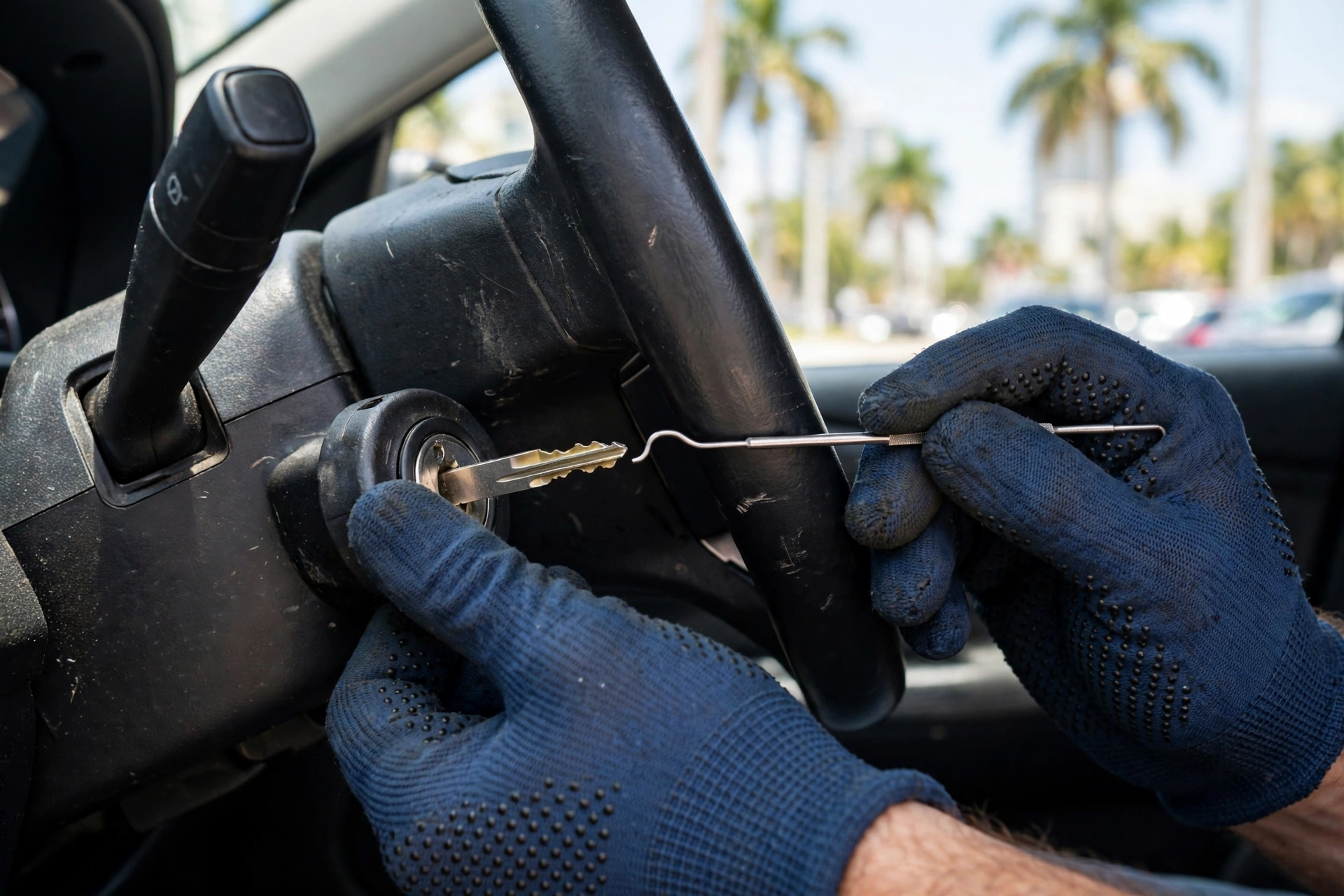
A professional automotive locksmith uses thin extraction tools designed to slide alongside the broken blade, hook its cuts and pull the fragment out along the same path it went in — without dismantling the lock in most cases. The work differs by location:
- Broken in the door lock. Usually the most straightforward extraction. Once the fragment is out, the lock is tested with a correct key; if the lock itself is stiff or damaged, that cause is addressed so the new key does not break the same way.
- Broken in the ignition. More delicate, because the ignition also holds the electrical switch and, on many models, the immobilizer antenna ring around it. Extraction is done with the ignition in the correct position when possible, and the switch is tested afterwards.
- Broken smart key or emergency blade. On keyless models, the hidden emergency blade inside the fob can break in the door lock while the fob itself still works. The fragment is extracted and a new blade is cut for the existing fob when the model allows it.
After extraction, the lock or ignition is checked for the reason the key broke. Extracting the piece without fixing a stiff, worn cylinder is an incomplete job — the replacement key will live under the same stress.
The replacement key: cutting and programming
Once the fragment is out, a working key has to be made:
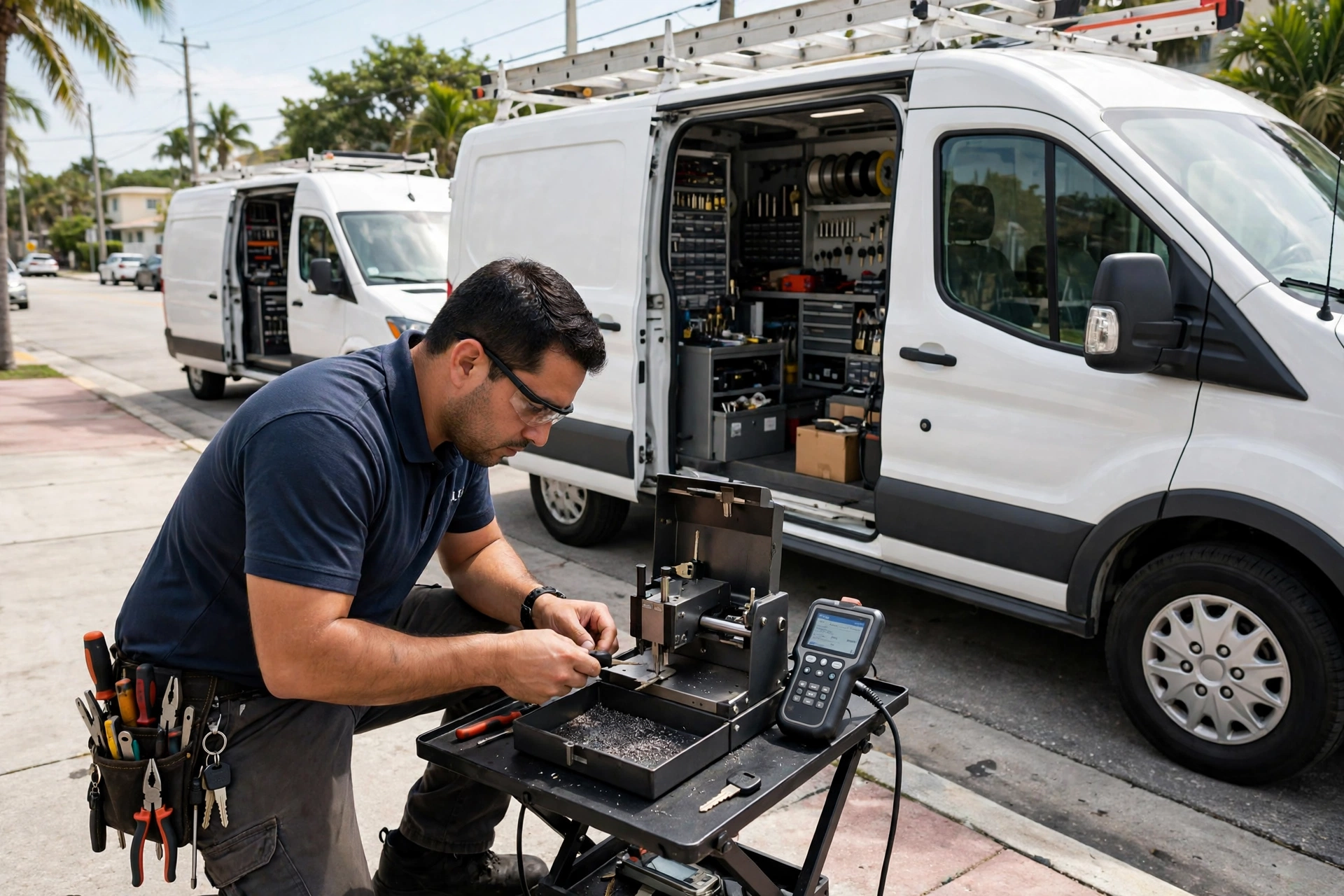
- Cutting from the broken pieces or by code. With both halves, the original cut can often be read and reproduced. When the key is incomplete or too worn, the cut can be obtained from the vehicle data or lock code on many models.
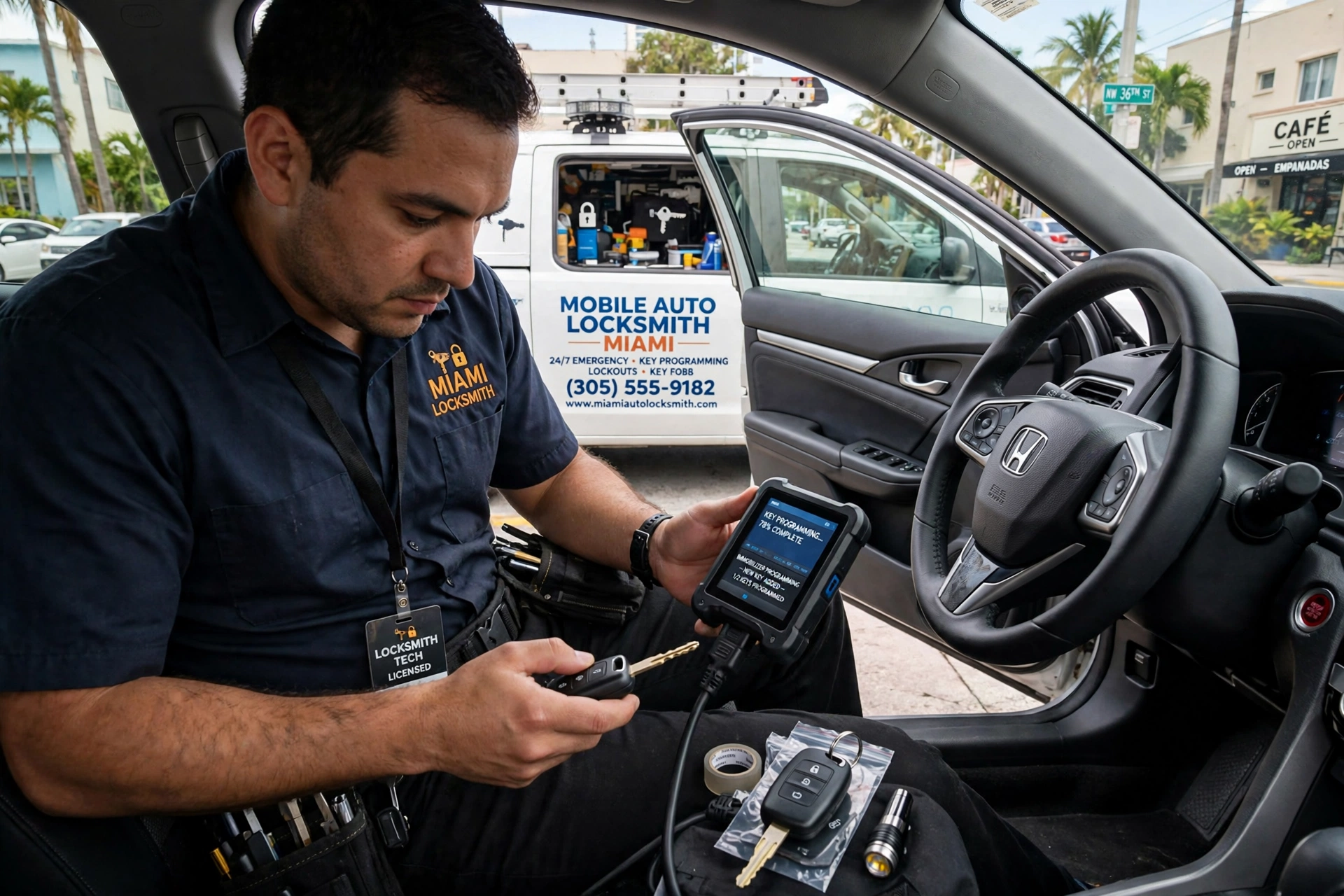
- Transponder programming. On chip keys, cutting the blade is only half the work: the chip must be programmed to the car or the immobilizer will block starting, as with any replacement transponder key.
- Smart keys and fobs. If the fob survived, only the emergency blade may be needed. If the fob was damaged with the key, a complete smart key is supplied and programmed to the vehicle.
- Testing everything. The finished job is tested in the door, in the ignition and, where applicable, with the remote functions — before the locksmith leaves.
When the ignition or lock also needs repair
Sometimes the broken key is the symptom, not the disease:
- The ignition cylinder is worn and keys have been sticking for weeks
- The lock turns with the fragment out, but feels rough or catches at one point
- A previous extraction attempt damaged wafers or left tool fragments inside
- The electrical part of the ignition switch fails to start the car even with a correct key
In those cases the honest recommendation may include repairing or replacing the affected cylinder or switch. We confirm the condition of the lock or ignition after extraction and explain the options before any additional work — extraction first, diagnosis second, no parts replaced on assumption.
What to have ready when you call
- Make, model and year — they decide the key type, the chip and the extraction approach
- Where the key broke — ignition, driver door, passenger door or trunk
- Both broken pieces — keep them; do not throw the outside half away
- Whether you have a spare key — and whether it still works in the other locks
- Your location — address or shared pin in Miami-Dade so the mobile unit reaches the car directly
- Proof of ownership — identification and ownership proof are reasonably required before a new key is cut and programmed
Service areas
Our mobile units cover Miami, Miami Beach, Doral, Kendall, Coral Gables, Brickell, Downtown, Wynwood, Hialeah, Aventura, Homestead and Miami Springs, and we serve drivers across South Florida.
Frequently asked questions
Can a broken key be removed without damaging the ignition?
In most cases, yes. Professional extraction tools are designed to remove the fragment along the keyway without dismantling or damaging the cylinder. Damage usually comes from improvised attempts before the locksmith arrives, which is why stopping early matters.
My key broke in the door lock but the fob still opens the car. Do I still need extraction?
Yes. The fragment left inside can jam the lock completely and will block any future manual use — exactly when you need it most, for example with a dead car battery or a dead fob battery. The emergency blade in the fob should also be replaced.
Can you make a new key from the broken pieces?
In many cases the cut can be read from the two halves and reproduced accurately. If the key is too worn or incomplete, the cut can often be obtained another way for the specific model. The chip programming is a separate, required step on transponder and smart keys.
Will a replacement key start the car right away?
A correctly cut and programmed key does. A blade that is only cut — without programming — may open the door and turn in the ignition, but the immobilizer will not authorize starting.
How long does extraction take?
A clean extraction is often the fast part of the job. Making and programming the replacement key, or repairing a worn ignition, takes longer and depends on the model. We confirm scope, time and price before the work begins.
Get the fragment out — and a key that works
If your key broke in the ignition or door lock in Miami, stop turning it, keep both pieces and send us the make, model and year with a note of where it broke. Matrix Locksmith Pro — broken key extraction, replacement key cutting and programming where your car is, anywhere in Miami-Dade.